
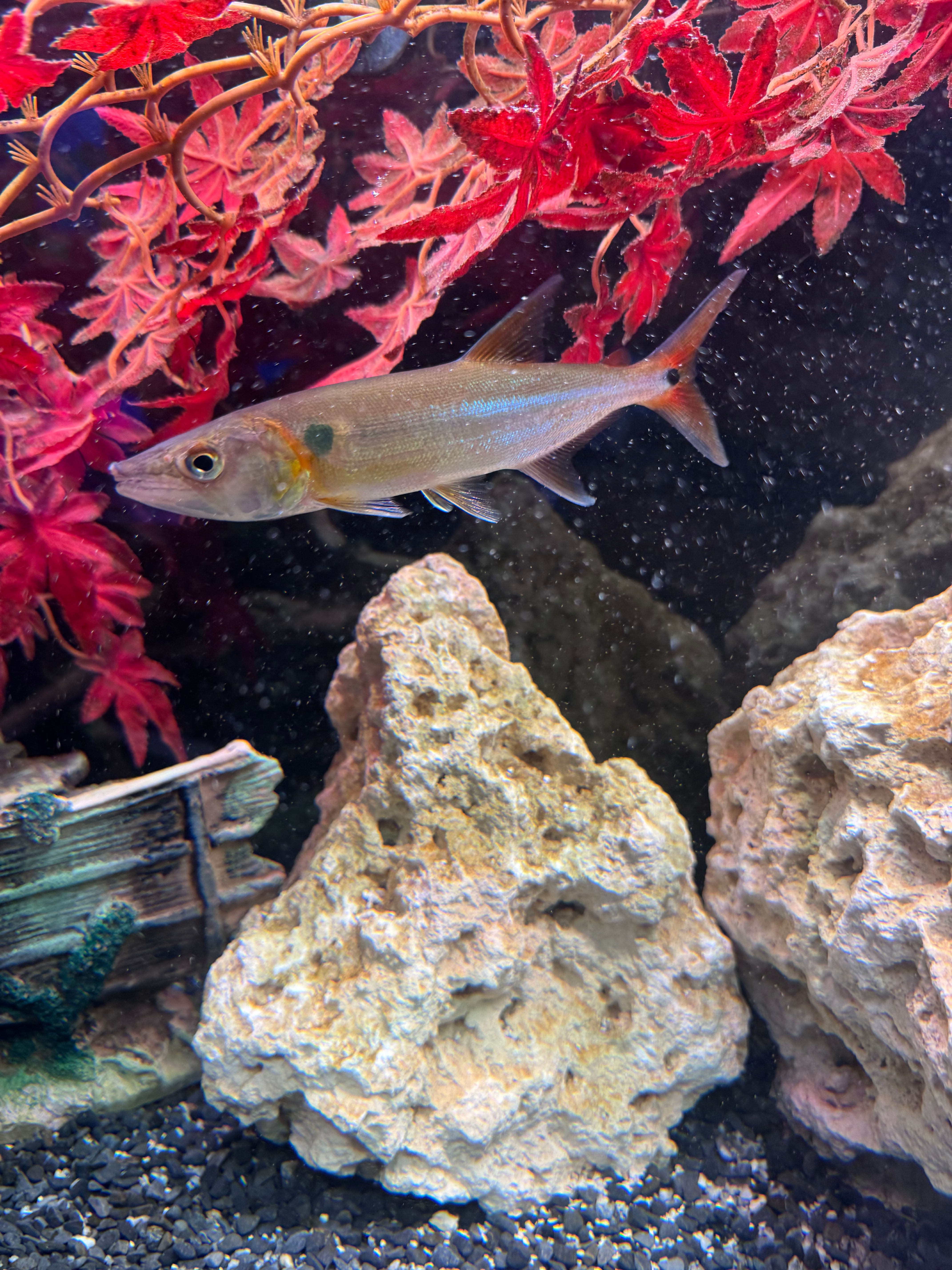
Red tail Barracuda 10”
£150.00Price
Red Tail Barracuda Care Guide
Species Overview
- Scientific name: Acestrorhynchus falcatus
- Origin: Amazon & Orinoco basins
- Adult size: 25–30 cm (10–12”)
- Temperament: Predatory, fast-swimming, semi-aggressive
- Experience level: Intermediate–advanced
Tank Requirements
Tank Size
- Single: Minimum 250 litres / 4 ft
- Group (preferred): 450–600 litres / 5–6 ft for 3–5 individuals
Aquascape
- Open swimming space, minimal clutter
- Driftwood or branches along the back
- Dimmish lighting preferred
- Tight-fitting lid—excellent jumpers
Water Parameters
- Temp: 24–28°C
- pH: 6.2–7.5
- Hardness: Soft to moderate (2–12 dGH)
- Flow: Moderate; appreciate a bit of current
- Filtration: Strong, highly oxygenated, and clean
Diet
These are fish-eaters in the wild, but adapt well to non-live foods.
Offer:
- Frozen lancefish, prawn, whitebait
- Chopped fish fillet
- High-protein carnivore pellets/sticks
- Occasional live feeders only if quarantined and parasite-free
Feeding Tips
- Feed small amounts 3–4 times weekly
- Use tongs for hand safety
- Avoid fatty meats (e.g., beefheart, chicken)
Behaviour & Tank Mates
- Best kept in a small group—reduces skittish behaviour
- Can be flighty; sudden movement causes darting
- Keep with large, fast, non-bite-sized tank mates, such as:
- Silver dollars
- Larger tetras (e.g., Congo, red hooks)
- Larger geophagus species
- Flagtail / big characins
Avoid:
- Anything under 7–8 cm (they will eat it)
- Slow or long-finned fish
- Aggressive cichlids that may nip
Health & Maintenance
- Weekly water changes (40–50%)
- Monitor for:
- Stress from poor water quality
- Injury from darting
- Parasites if fed unquarantined feeders
- Provide strong oxygenation—powerheads or spray bars help
Breeding
- Extremely rare in aquaria
- No reliable reports of home breeding
- Wild caught is most common
Quick Care Summary

