
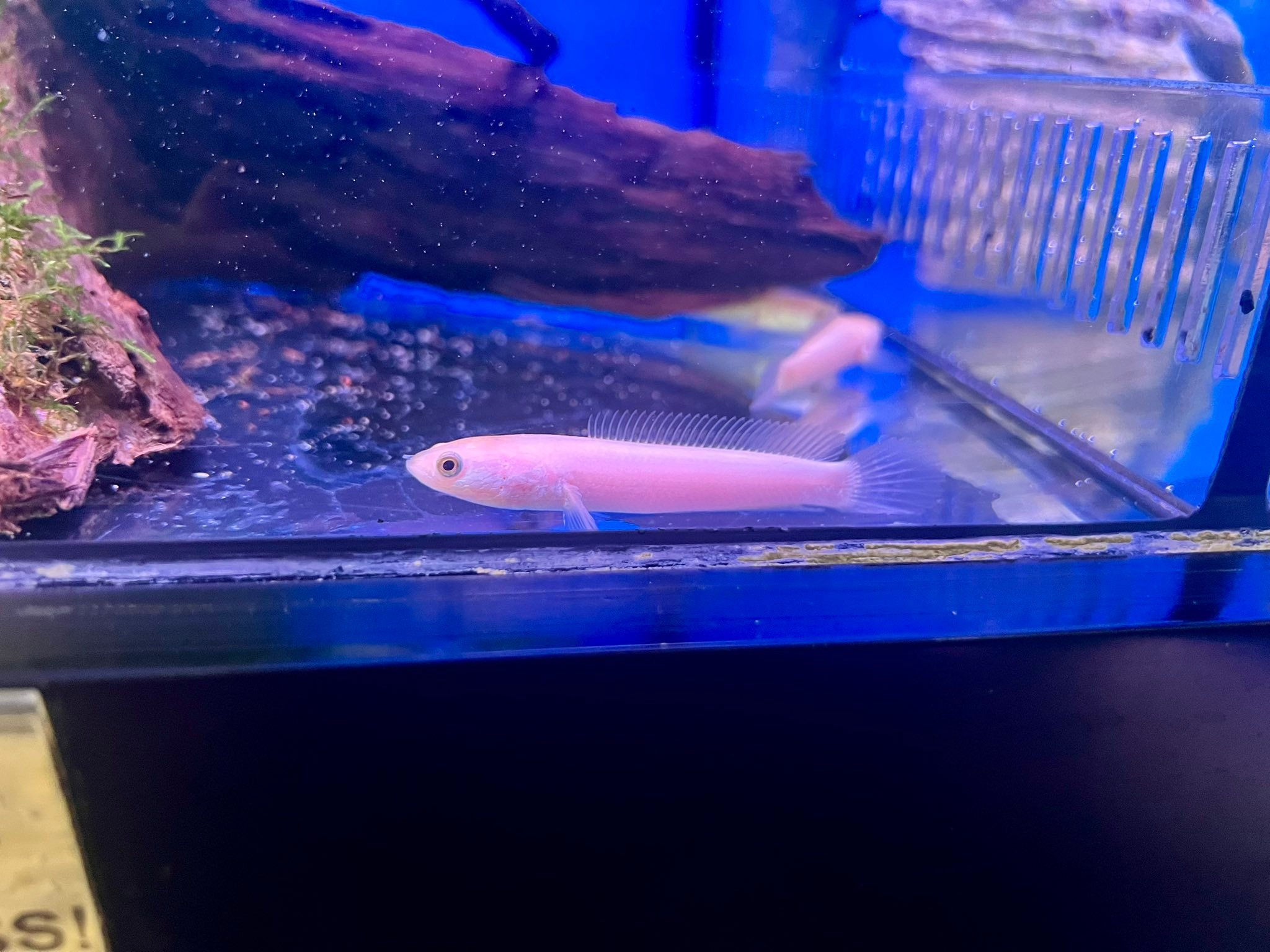
Dwarf Golden Snakehead - Captive bred
£30.00Price
Here’s a care guide for the Dwarf Golden Snakehead (Channa aurantipectoralis) — a smaller, striking species from northeastern India and Bangladesh.
🐍
Dwarf Golden Snakehead (Channa aurantipectoralis) Care Guide (UK)
Common Name: Dwarf Golden Snakehead
Scientific Name: Channa aurantipectoralis
Origin: Northeastern India (Mizoram region), Bangladesh
Adult Size: Around 15–20 cm (6–8 in)
Lifespan: 8–10 years
Temperament: Semi-aggressive; territorial but less so than larger Channa species
🌡️
Tank Requirements
- Tank Size: Minimum 180 litres (around 4 ft tank) for a single or bonded pair
- Temperature: 22–26 °C
- pH: 6.5–7.5
- Water Hardness: Soft to moderately hard
- Filtration: Efficient but with gentle flow; snakeheads dislike strong currents
- Lighting: Moderate to dim – use floating plants to diffuse light
- Lid: Essential – they are excellent jumpers
🌿
Tank Setup
- Substrate: Sand or fine gravel
- Decor: Provide plenty of hiding spots with driftwood, rocks, and dense plants
- Cover: Floating plants help them feel secure
- Territory: Each fish needs clear boundaries to reduce aggression
🍤
Feeding
- Diet: Carnivorous – prefers live and frozen foods
- Options:
- Earthworms, prawns, bloodworms, mussel, and fish fillet
- Can be trained to take high-quality pellets
- Feeding Frequency: 3–4 times a week (they don’t need daily feeding)
👩👩👦
Behaviour and Tankmates
- Temperament: Territorial, especially in smaller tanks
- Tankmates: Best kept alone or as a bonded pair
- Avoid community tanks – they may attack smaller fish
- Compatibility: Peaceful with conspecifics only when paired; otherwise solitary
🐣
Breeding
- Type: Cave spawner and mouthbrooder (depending on population variant)
- Difficulty: Moderate – pair formation can be tricky
- Conditioning: Provide high-protein diet and secluded caves or pipes
⚠️
Notes
- Requires a cooling period or seasonal variation (cooler winter months around 20 °C) to mimic natural conditions and promote health.
- Legal status (UK): Legal to keep and sell, but never release into the wild — all Channa species are invasive

